Portraiture and Why Everyone Is Beautiful
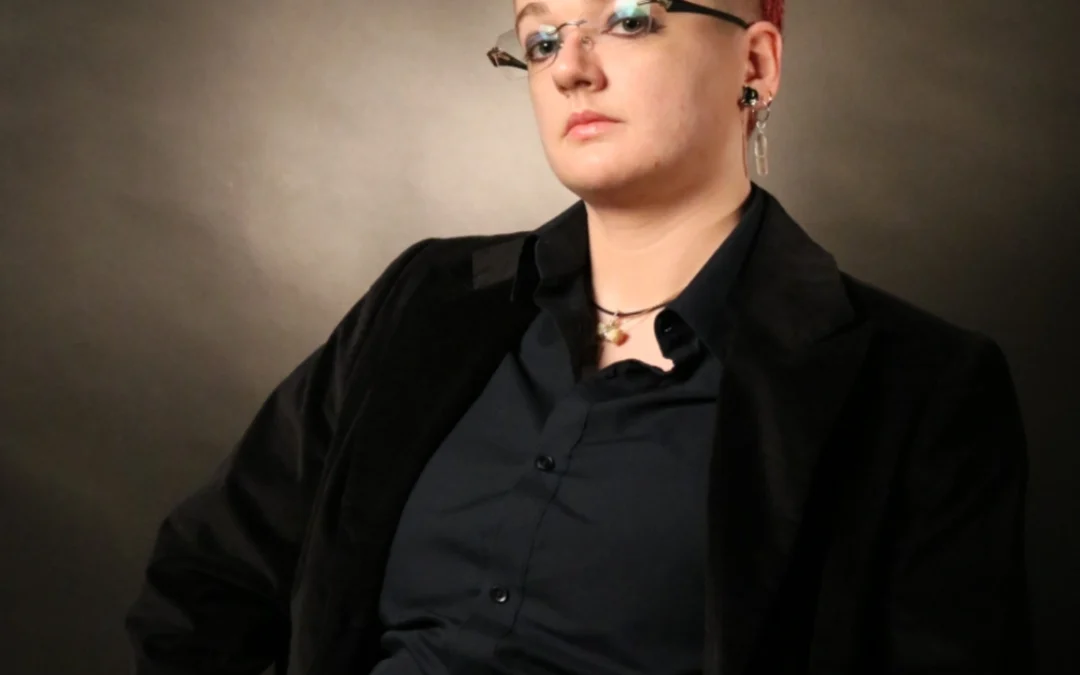
As an art program graduate, I have attended many model drawing sessions. Life drawing and sketching was one of my most difficult classes, but it was also my favourite. The deep, traditional history of charcoal and conté sketching, along with the meditative observation of the human form, made for a tranquil three or so hours that I always looked forward to.
It helped me understand something somewhat obvious that we, as people, still need the occasional reminder of: the many forms people take, their differences, imperfections, and flaws are what make them truly beautiful and, in my opinion, interesting and fun to draw. I’ve had friends I’ve asked to pose question my choice of them as subjects, and I often need to explain my preference for uniqueness or interest-grabbing features rather than “traditionally beautiful” subjects.
From blocky noses and chins to unique or unusual scars, curves that inspire silk-smooth lines to angles that force harsh shadows and sharp profiles, each shape creates striking definition in a figure that breathes life into a sketch.
I find that when the act of creating work feels inspired and lifelike, the end result feels the same. The embrace of imperfection brings artwork into reality. It is explosive and beautiful. The unique features that make up a subject create a defiant and powerful work of art, and I believe that description applies to everyone. Every feature that inspires self-consciousness is actually a defining detail that makes an individual’s portrait more realistic and recognizable.
From the time I was almost four years old, I knew I was an artist. Not because someone told
me, but because I felt it deeply. I was always drawing, building, imagining, and questioning the
world around me. Working with my hands, engaging my mind, and refining technique has
always grounded me; the physical act of making keeps me present with my thoughts. Art, for
me, is both reflection and responsibility. It is how I understand identity, belonging, and
transformation.
For over a decade, my work has been showcased in 30+ international exhibitions, including 12
major shows across Canada, at venues such as 401 Richmond, Venice Lands Art Prize, Yaşar
University, Al-Hamra Arts Council, and Toronto City Hall. My practice merges art, activism, and
community engagement, centering queer identity, gender, and diversity while embracing
decolonized ways of seeing and creating. As a Visual Artist and Creative Changemaker, I
believe artists must understand what they are doing and why. When we are conscious of our
identity, our histories, and the systems that shape us, our work carries integrity and depth.
As an educator and department founder, I have built award-winning programs from the ground
up and mentored more than 100 students toward scholarship-winning thesis projects. Today, as
Operations Lead at NYA, I guide outreach initiatives and ensure smooth, thoughtful operations
across all aspects of the organization’s work. I see arts administration not as paperwork, but as
care, creating structures where artists and communities can thrive.
Understanding identity is essential. So is joy. Sustaining both professional and personal practice
requires balance, curiosity, and genuine enjoyment of the process. My next goal is to help make
the arts sector more economically sustainable and progressive by implementing innovative
strategies and new dimensions of leadership, ensuring artists are empowered not only
creatively, but structurally and financially. Art should move hearts, but it should also build
equitable futures.
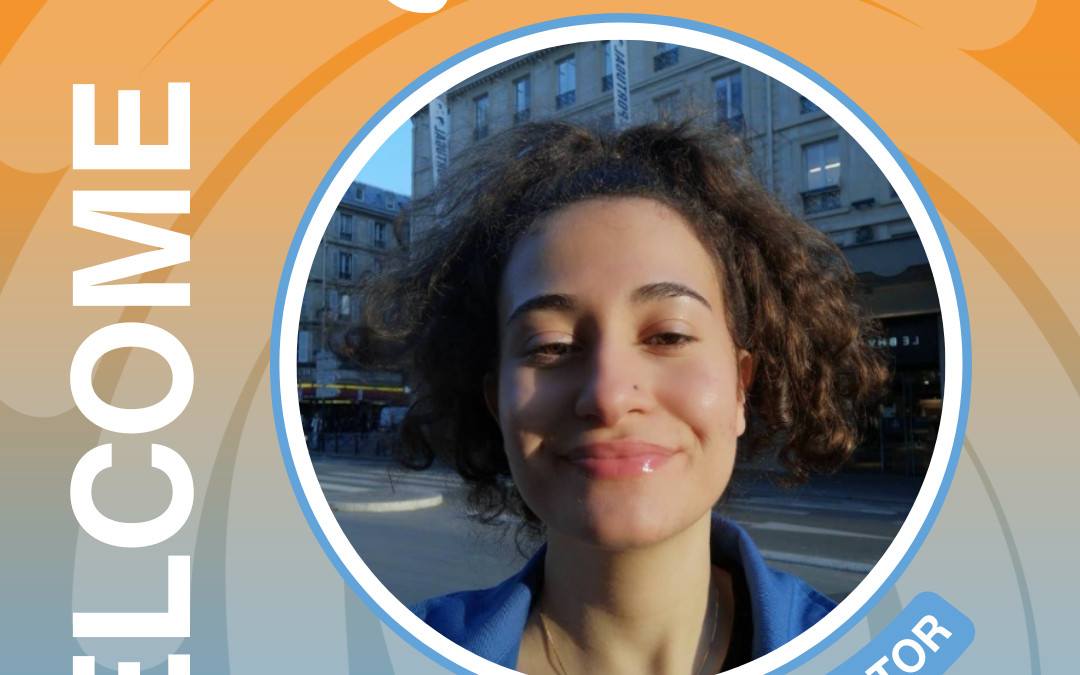
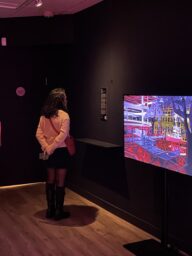
Habiba recently visiting the Textile Museum.
I’m a multidisciplinary artist, curator, and arts administrator who studied drawing and painting at OCAD University. My practice moves between studio work, digital journaling, curation, and community programming, however, I’ve become just as interested in how art brings people together as I am in making it.
One of my favourite projects at North York Arts so far has been Introduction to Tatreez: Palestinian Embroidery. When we saw how quickly it filled up and realized we really needed that second workshop, it showed how hungry people are for spaces where they can connect and find common threads (pun intended). Not just attend an event, but learn alongside each other, ask questions, share stories. In a time when so many of us feel isolated, passing one another and missing opportunities for connection, I think community-engaged arts offer something we’re all craving: a reason to show up, to be present with people, and to care about something together.
A lot of my inspiration comes from graphic novels like Mis(H)adra by Iasmin Omar Ata, Marbles by Ellen Forney, and anthologies like Now: The New Comics Anthology. I love how they weave together text and image, how they make room for vulnerability and unique voices. That sensibility shows up in my own digital journaling and painting, especially in how I think about rhythm, sequencing, and storytelling.
Lately, I’ve been paying attention to small things: “unofficial” public art tucked away in unexpected corners, conversations that linger after an event ends, the way a workshop can shift the energy in a room. For me, art isn’t just about what we make. It’s about the connections we build and the spaces we create for each other to feel a little less lonely in such a big city.
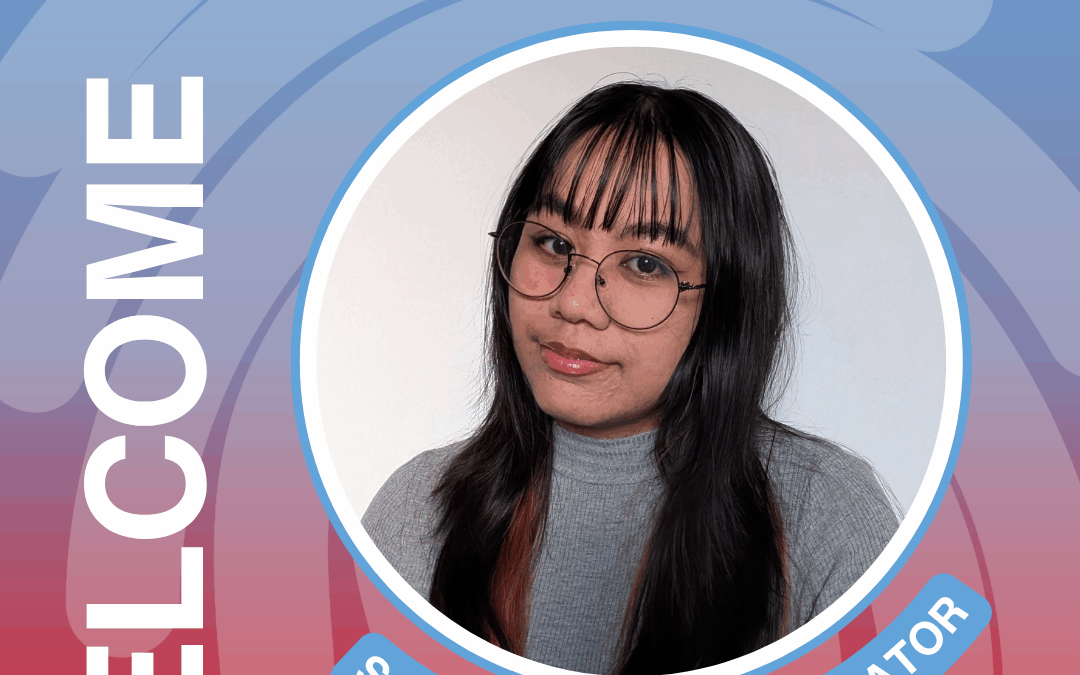
Art has been one of my biggest catalysts for transformation
My earliest memory was in kindergarten. I vividly remember using broken crayons to create a scene from my favourite storybook, Jack and the Beanstalk. Even though I don’t remember how good or bad my drawing came out, I remember the feelings I had at the time–excitement, curiosity, and a bit of pride when my tiny hands created something out of my imagination.
The second transformation was when my mom gifted me my first DSLR camera. My love for photography stemmed from a desire to see the world differently, and it soon became me capturing everyday objects in ways I don’t normally see them. Photography made me value and see the small nuances of everyday living, things around me, and the precious moments of the present.
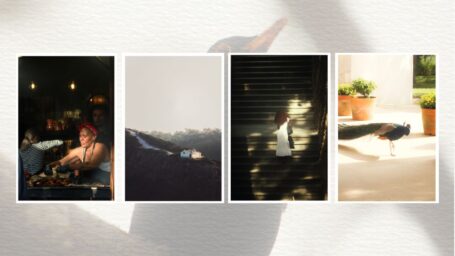
Photos By Jodi Clare Pita
My third transformation was during the pandemic with pen and paper. Pen and paper was my place to express emotion and the thoughts I was afraid to share with others. Whether it was in sketch or poetry, pen and paper was my safe space. It taught me how to find the words to emotions I couldn’t process.
Art continues to shape me into the person I am and strive to become. Art will always be a part of me, whether in the form of large ocean waves or brisk rain showers. As one of the newest year-round team members of North York Arts, I can’t wait to expand my connection to the arts and the community. And more than that, I’m looking forward to being part of NYA’s mission to help sustain a vibrant and creative North York.
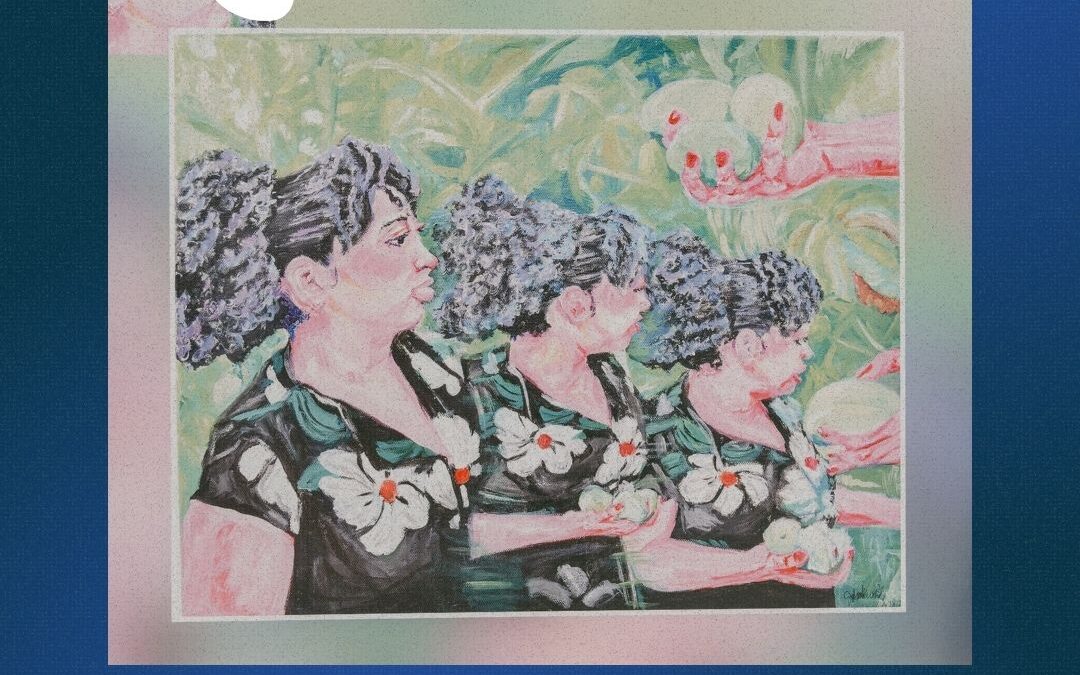
Northbound: Songs of Sovereignty unites five contemporary Black and Indigenous artists whose works embody resilience, cultural memory, and self-determination. Presented for Emancipation Month, the exhibition honours the ongoing pursuit of freedom across generations.
Spanning portraiture, abstraction, textile, and digital media, the artworks explore sovereignty through spiritual inheritance, political refusal, ancestral memory, and daily embodiment. Apanaki Temitayo’s textile muses channel resilience and healing; Claudia Luz Doare honours Miskito culture by rendering memory into form; Ghislan Sutherland-Timm’s collages trace water’s ties to diaspora; Segun Caezar’s portraits are rooted in historical reclamation and ancestral witnessing; and Yinkore’s mixed media reveres the depth of Black womanhood.
Together, their works form a visual chorus, each a distinct voice in a shared song of memory, identity, and liberation.
Through this collection, Songs of Sovereignty invites viewers to witness the ways artists hold space for memory, identity, and liberation. It is not only a celebration of cultural pride, but also an acknowledgment of the ongoing struggles for justice, freedom, and recognition. Each work is a note in a larger composition; a visual chorus that insists on the right to exist fully, to tell one’s story, and to be heard.
Apanaki Temitayo’s “Persistence” is a testament to the unwavering power of BIPOC women who continue to fight for bodily autonomy and reproductive justice in the face of erasure and oppression.
Cloaked in vibrant Ankara fabrics, this muse is rooted in cultural tradition while pushing forward against the tide of colonial systems. Her gaze is fierce, her presence immovable—she represents the ancestral will to survive despite systemic barriers. This piece channels the legacy of women who have resisted control over their bodies for generations and continue to rise, stitched into the landscape of resistance.
Its companion piece, “Wisdom” stands as the ancestral keeper, embodying the spiritual intelligence, cultural knowledge, and lived experience passed down through generations of BIPOC women. Her cloak tells stories through pattern and symbol, and her face reflects generations of BIPOC women who have carried the burden of injustice and still passed down love, insight, and resistance.
She reminds us that liberation doesn’t start in courts—it begins in stories, in rituals, in blood memory. Wisdom is the voice that echoes long after the rally cries fade, insisting we remember who we are and what we deserve.
Within the context of Songs of Sovereignty, these textile muses stand in powerful dialogue; one embodying the unyielding will to survive, the other safeguarding the wisdom that ensures survival has meaning. Together, they assert that sovereignty is never simply bestowed; it is forged in resistance, nurtured through care, and carried forward by those who refuse to surrender memory, dignity, or self-determination.
Claudia Luz Doare’s “Mi Tierra” is an intimate self-portrait and a vivid meditation on Miskito heritage. Through rich patterns and layered vegetation, Doare envisions La Moskitia as it existed before colonization, abundant, diverse, and alive with harmony between people and land.
“Mi Tierra” operates as an act of reclamation, drawing ancestral land into the present through memory and imagination. It asserts the beauty and resilience of Miskito identity, showing that self and place are inseparable, and that culture is not only remembered but actively lived and sustained today.
Her second work, “Plun pi aya” (“Dinner’s served” in Miskito) offers a quiet yet profound glimpse into a traditional communal hunting ceremony. The work captures a moment of connection between people and the land that sustains them. The hunt is not merely an act of survival; it is a ceremonial practice, embedded in a network of relationships between human, animal, and environment.
As part of Songs of Sovereignty, these pieces center the act of cultural preservation as a living form of resistance. They reveal that sovereignty is enacted daily – in shared meals, in traditions upheld, in the continued honoring of relationships to land – and that survival is strengthened when culture remains intact despite colonial attempts at erasure.
Ghislan Sutherland-Timm’s “vol. iii. this body loves too” s part of an ongoing autobiographical-fictional collection of work entitled Why is water so heavy? (c. 2022–present). Shaping a visual diary, this series interlocks the fluidity and borderless nature of water with themes of diaspora and landmarking.
In this entry, “vol. iii. this body loves too” examines the complex relationships enslaved Africans formed with both land and water through the Atlantic slave trade. These ties to non-native lands were forged in the forced exploitation of people and ecosystems across plantations of coffee, sugar, tobacco, cotton, and indigo.
Yet within this violence, cultural resilience endured. Power was renegotiated through care, survival, and the blending of African and Indigenous traditions. Today, this legacy lives on in Tkaronto/Toronto’s diasporic cuisines—plantain, jerk chicken, ackee and saltfish.
In the context of Songs of Sovereignty, the work honors endurance as a form of self-determination, showing how cultural memory transforms displacement into belonging. It recognizes that survival is not passive – it is an active, creative force that reclaims what was taken, reshapes what was imposed, and roots identity in new soil without severing ancestral ties.
Segun Caezar’s “SALVATORE NIGRUM” reimagines Leonardo da Vinci’s Salvator Mundi through an African diasporic lens. Here, the sacred figure is adorned with dreadlocks, royal blue agbada, and a serene gaze. One hand blesses, while the other cradles a golden koi.
The fish, here, replaces the orb—representing both global burden and spiritual inheritance. The painting critiques the colonial roots of Christianity while reclaiming its iconography through an African diasporic lens. It asserts that liberation must include spiritual sovereignty, and that salvation, for the colonized, may look radically different from what was once preached.
In “ALL MY FRIENDS ARE KOI,” a young Black girl gazes directly at the viewer, her eyes framed in gold, her cheek pressed gently against a koi fish. The stark grey background sets the tone for a quiet confrontation between innocence and history.
The koi, long associated with perseverance and transformation, carries layered meaning. It functions here as a silent companion, an ancestral witness, and a bearer of stories too long ignored. Its presence is central to the work’s exploration of isolation, beauty, and inherited memory. Through the subject’s stillness, Caezar asks what freedom looks like when shaped by survival.
Positioned within Songs of Sovereignty, these portraits move between the sacred and the intimate – one reclaiming divine imagery, the other rooting freedom in lived experience. The koi becomes the thread between them, a vessel of endurance, renewal, and the steadfast spirit that endures across histories of displacement. Together, they affirm that sovereignty is sustained through both spiritual reclamation and the tender, enduring bonds that anchor identity across distance, memory, and time.
Yinkore’s “Redefining Boundaries” dismantles reductive archetypes that have long confined and flattened Black women into singular narratives. Through a rich layering of photographs, floral motifs and digital collage, Yinkore explores the emotional complexity of a father-daughter relationship marked by absence, longing, and the possibility of no repair.
This piece refuses erasure by creating space for vulnerability, grief, and resilience. Through digital collage, Yinkore pieces together fragments into a sovereign self, insisting on full personhood.
Her parallel work, “We come in peace” celebrates the joy of queer love – soft, intimate, and defiantly visible. Yinkore’s layered digital collage, blending photography and painting, creates a visual space where tenderness is both celebrated and protected.
The composition challenges the societal narratives that have historically flattened Black women into one-dimensional portrayals, stripping away complexity and depth. Here, intimacy is not hidden or diminished; it is centred.
Framed by Songs of Sovereignty, these pieces stand as powerful visual acts of resistance, affirming that Black womanhood holds multitudes; embracing grief, strength, tenderness, and defiance simultaneously. Together, they insist that sovereignty is not only the right to self-govern politically but also the right to self-define emotionally. It is the freedom to choose connection without apology or restraint, to craft identity from one’s own truths, and to inhabit joy as a radical, unyielding form of self-determination.
Across the practices of these five artists, a shared language emerges – one that speaks across time, place, and medium to show that sovereignty is not granted, but built, protected, and carried forward. It lives in ancestral memory, in the persistence of tradition, and in creative visions that refuse erasure.
Northbound: Songs of Sovereignty is presented by North York Arts and curated by Funmi Ajala and Shadio Hussein of Muse and Museums, a Toronto-based curatorial team dedicated to spotlighting local BIPOC artists. Northbound is made possible through the partnership and support of GWL Realty Advisors.
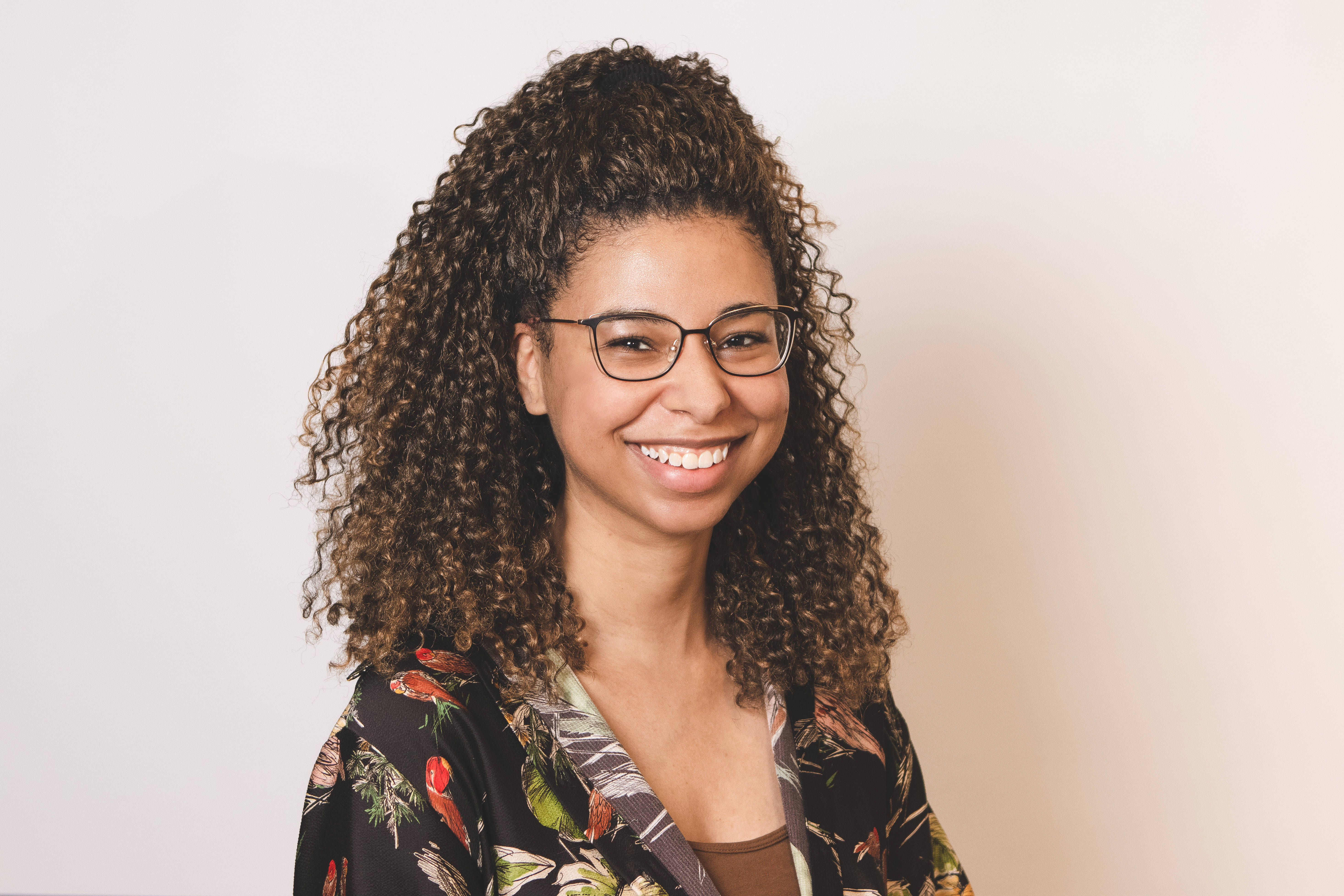
Continuing the Journey: Creative Collaborations
Since my last feature with North York Arts, my creative journey has expanded in new and meaningful directions. I’m still rooted in the values I cultivated growing up in North York—culture, community, and storytelling—but now I find myself bridging digital and analog practices, exploring cultural heritage, food sovereignty, and youth empowerment in new ways and collaborations.
This year, I’ve been working on Dutch Pot in Diaspora, an anthology and workshop series that celebrates the power of food sovereignty and Black cultural storytelling through poetry and visual art. It’s a love letter to family recipes, the wisdom of elders, and the role of food in shaping identity inspired by my exhibition at DesignTO titled Nourishing Roots: Cultural Memories. I am so grateful for my collaborators Martin Gomes and Shelly Grace who have co-facilitated Pot of Poetry which created space for conversations around cultural fusion, gentrification, connecting with our senses, and food sovereignty. A limited print run of the Dutch Pot in Diaspora anthology will be available on my website for pre-order.
I’ve also deepened my work as a mentor and facilitator, co-leading the Verse & Vision program with my collective Verse & Visual Expressions. Verse & Visual Expressions is a multidisciplinary collective founded by me and Shelly Grace where we explore the intersection of poetry and visual art and center the narratives of equity-deserving artists. Our vision is to create transformative artistic experiences that encourage self-expression, collaboration, and community building, while amplifying underrepresented voices within the arts sector. Rooted in spoken word poetry and visual storytelling, we challenge conventional modes of artistic production by merging written and visual art forms. Our work is deeply influenced by Afrofuturism, diasporic connections, and Black resilience. Through our creative lens, we explore themes such as identity, memory, social justice, and freedom, and engage artists in conversations around selfhood and cultural reclamation. By integrating the fluidity of mixed media visual art and the power of poetry, we produce immersive performances that push the boundaries of both disciplines. We offer mentorship and professional development, aiming to foster a community that reflects our values of collaboration, inclusion, and artistic growth. Our flagship program, Verse & Vision: Collaborative Creations, serves as a platform for equity deserving artists to develop their skills, collaborate, and showcase their work in community settings. This summer on August 28th, we will have a showcase that celebrates the collaborative works created in the cohorts so stay tuned on IG @verseandvisualexpressions to save the date!
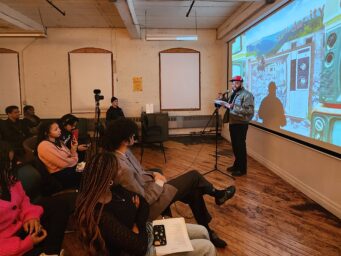
Shot of Verse & Vision Collaborative Creations Cohort 2024 Showcase at JAYU
Art, for me, is a vehicle for connection and transformation. Whether it’s painting murals that reflect our community’s diversity or facilitating workshops that empower youth to share their narratives, I am committed to using creativity as a tool for social change. Collaboration and curation are where my spirit feels most alive (see Northbound 2024). I see myself as a catalyst and story weaver—someone who brings people, art, and ideas into active conversation. These exchanges aren’t just creative; they’re transformative. Every collaboration expands my worldview and grounds me in the power of collective imagination. I’m no longer interested in working in silos or sitting in stagnation. I’m drawn to integration—sharing resources, knowledge, and creativity to unlock alternate realities rooted in community care and social wellness. Curating and collaborating allow me to practice abundance, reflection, and possibility.
There’s a lot happening this summer and I invite you to come by all the showcases, exhibitions, and installations that will be popping up over the next few months and share what sparks interest for you! (There will be more sneak peeks shared on my social media)
If you’re interested in booking a workshop, collaborating on a project, seeking out mentorship, exchanging ideas, or anything else creative and community-centered—I’d love to connect! I’m an open book and always excited to collaborate alongside others. Reach out through Instagram @articulately_jasmine or my website www.jasminevanstone.com to begin the conversation.
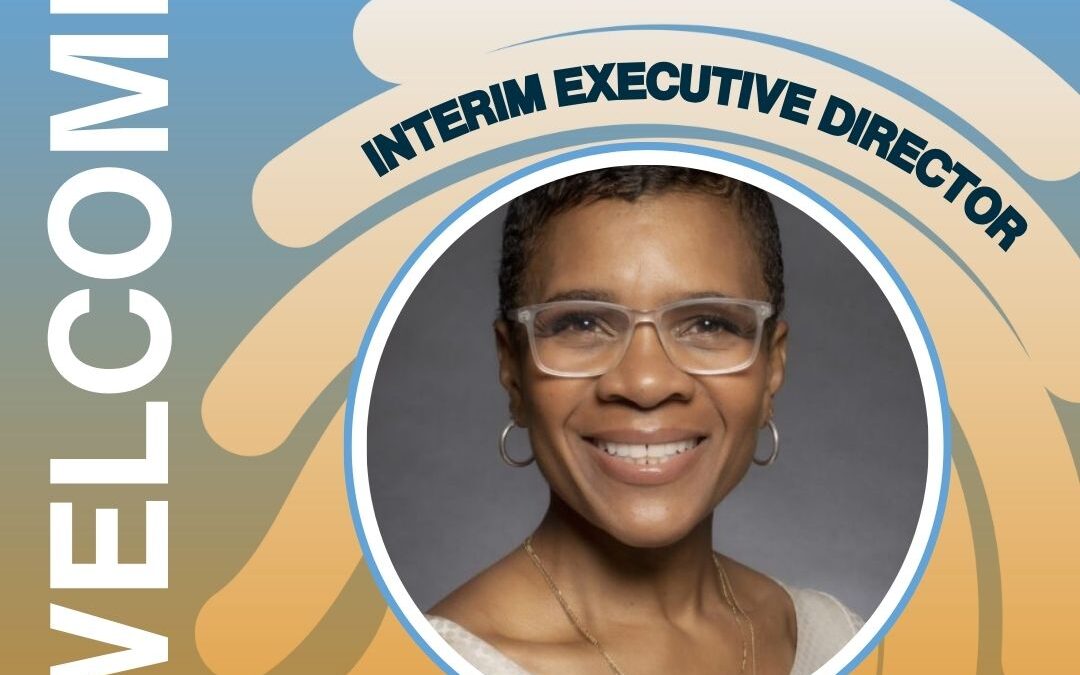
Greetings North York! I recently joined NYA as Interim Executive Director for the 2025-2026 program season.
Throughout my career in the creative sector, I’ve played a number of roles: film and TV camera assistant, talent pipeline executive at Warner Bros. Discovery, head of a makeup arts and design college, among others.
Ironically, despite spending my entire career literally marinating in the cultural industries, I’m not a particularly artistic person.
Even my vaguely creative early career pursuits – journalism and cinematography – had more to do with practical goals, technical skills and earning a solid union paycheque than the transformative beauty of art.
But there’s something about Canada’s arts, culture and creative industries sector which contributes more than $55 billion to our country’s GDP that has held me captive ever since I read my first “grownup” novel as a kid.
First, it was the artists themselves. Their talent and compulsion to create not only sent me to far-flung, unimagined worlds but also pulled me inwards to re-evaluate my innermost thoughts and values.
Then, it became the industry. That army of advocates and champions. Whether they’re on the dynamic side of performance or in the cautious arena of public policy, their drive to make this sector succeed never ceases to impress.
And finally, it’s the impact on the audience. Whether it’s through hyper-local events like arts-in-the-park or internationally renown events that attract global performers and visitors, communities flourish when they are served by the arts.
So while my guitar-playing might elicit a “Yikes, no” even from my own mother, it’s my deep connection to the artists and the ecosystem around them that keeps me fired up and optimistic about the future of this sector.
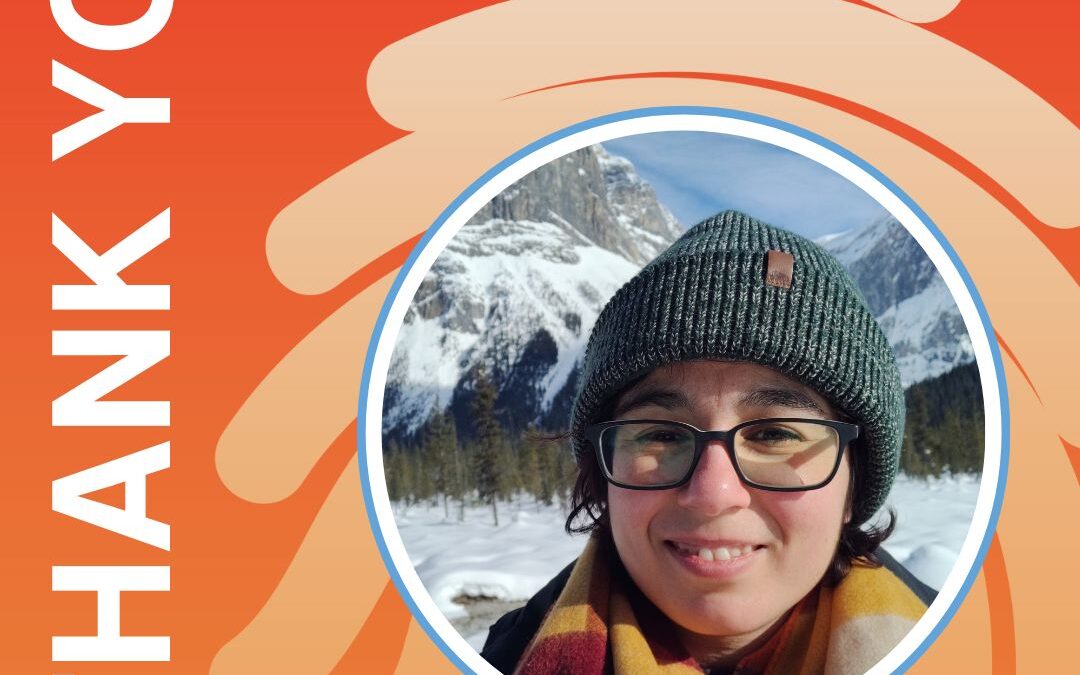
Dear NYA community,
After three incredible years at North York Arts, I am bidding farewell to my role as communications manager at this wonderful organization.
As I reminisce about my time here, I am filled with sweet memories of our amazing programming, the many ways we’ve made a true impact on the art and artists of North York, and the tremendous amount of growth that I’ve had the privilege to not only witness but be a part of.
One of the first programs I attended at NYA was “Let’s Dance” led by Mafa Dance Village in Downsview Park. I was shy to participate at first – but with eager encouragement from the team, instructor, and participants, soon I was learning new dance styles and wondering how I got so lucky that this was my job!
That warmth and good energy propelled me through the rest of my time at NYA, with a full-scale rebrand that has elevated our communications, an Outreach Program designed to expand our reach in all six wards of North York, a brand new festival, Inspire North – curated entirely in-house, five impactful years of the Seniors Animation Project, two beautiful collaborative murals at The Gibson House for Art Connects, and so many more big successes that I’ll carry with me throughout the rest of my career.
I am so grateful for all of the amazing people I’ve had the privilege of working with, for all of the brilliant North York Artists I’ve gotten to know, and for all of the art we’ve created together over the years.
As a North York based artist myself, I won’t be too far away, and I’ll always be cheering for North York Arts wherever I am.
As I prepare for my next steps, I am more than thrilled and so proud to introduce Chantel Parris as the incoming Communications Manager. We have worked together very closely through her work as our Community and Social Media coordinator, and I know she will shine in this new role, continuing to elevate the arts in North York in many ways.
Thank you for everything, and I hope to see you soon at an NYA program!
From all of us at North York Arts, we extend our heartfelt thanks to Anna for her incredible dedication, creativity, and unwavering support of our artists, programs, and community. Anna has been instrumental in shaping the identity of North York Arts—elevating our branding with vision and clarity, nurturing our programs and artists with compassion and thoughtfulness, and bringing innovation, excellence, and care to every aspect of our operations. Her leadership, insight, and commitment have made a profound and lasting impact, and her legacy will continue to guide and inspire us. THANK YOU!
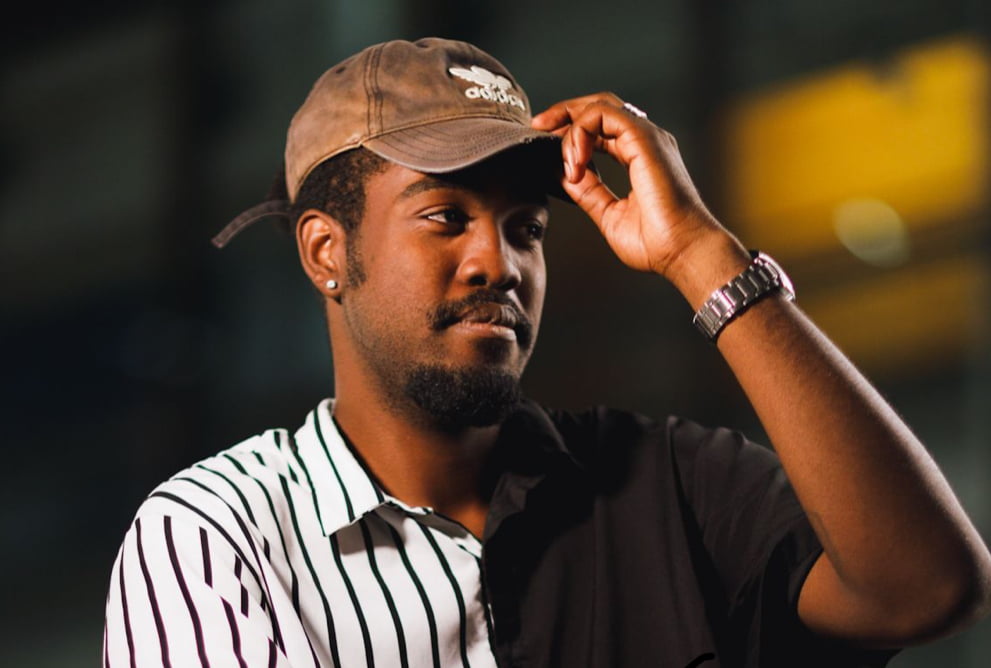
Declan David is an emerging visual artist and animator based in Toronto, celebrated for his vibrant use of colors and innovative styles. Influenced by his Trinidadian and American heritage, the Neo-expressionist movement of the 1980s, and the graffiti culture of the 1990s, Declan’s works delve into the contemporary Black male experience. His diverse portfolio includes experiential paintings on glass and canvas, illustrations, and animations, steering away from sensationalized depictions of Black bodies.
This past year, Declan has expanded his impact beyond visual art by venturing into teaching. In October and November 2024, he led a series of painting workshops for The Youth Art Mentorship Program, where he helped teens elevate their painting skills and provided professional development guidance. This March, he will continue to inspire young artists by teaching at the North York Arts’ Teen Art Hub, alongside his long-time friend and fellow Black artist, Azania Rashida.
Currently, Declan is working on an exciting comic action-adventure series titled “Zero Percent Hero.” Set in a magic-fueled version of our modern age, the story explores a world where humanity is confined to one-third of the planet due to the overpopulation of monsters and the loss of magic 10,000 years ago. As magic begins to return, different factions vie for control of the old and new worlds. At the center of this tale is Darius and his friends, who seek freedom from the perpetual wars but soon realize that freedom comes at a cost.
Using inventive techniques with spray paint, stencils, and paint markers, Declan creates neo-expressionist paintings featuring relatable characters in engaging atmospheres. His work is on display at the Don Mills branch of the Toronto Public Library until the end of February, showcasing the “Wonder” 2024 series. This series comprises seven paintings on clear glass and mirrors, with four paintings depicting Black boys smiling despite their circumstances, and the remaining three representing elements that help them overcome their situations.
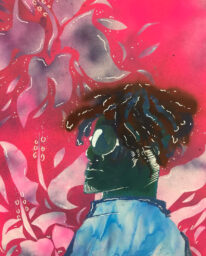
My Hair, My Vibe by Declan David
Additionally, Declan’s “My Hair My Vibe” series from 2019 is also on display. This three-piece series on canvas features self-portraits with different hairstyles, each set against a background that reflects the emotions evoked by the hairstyles. Another standout work, “Lost Boy,” is an independent piece painted on a mirror, depicting a young boy walking through a deteriorating space, capturing a sense of unease and introspection.
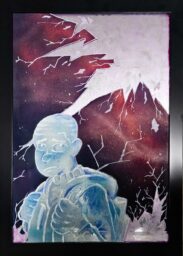
Lost Boy by Declan David
Through his art and teaching, Declan David continues to strive to make a significant impact on both the artistic community and the lives of young artists, leaving a lasting impression with his vibrant and thought-provoking works.
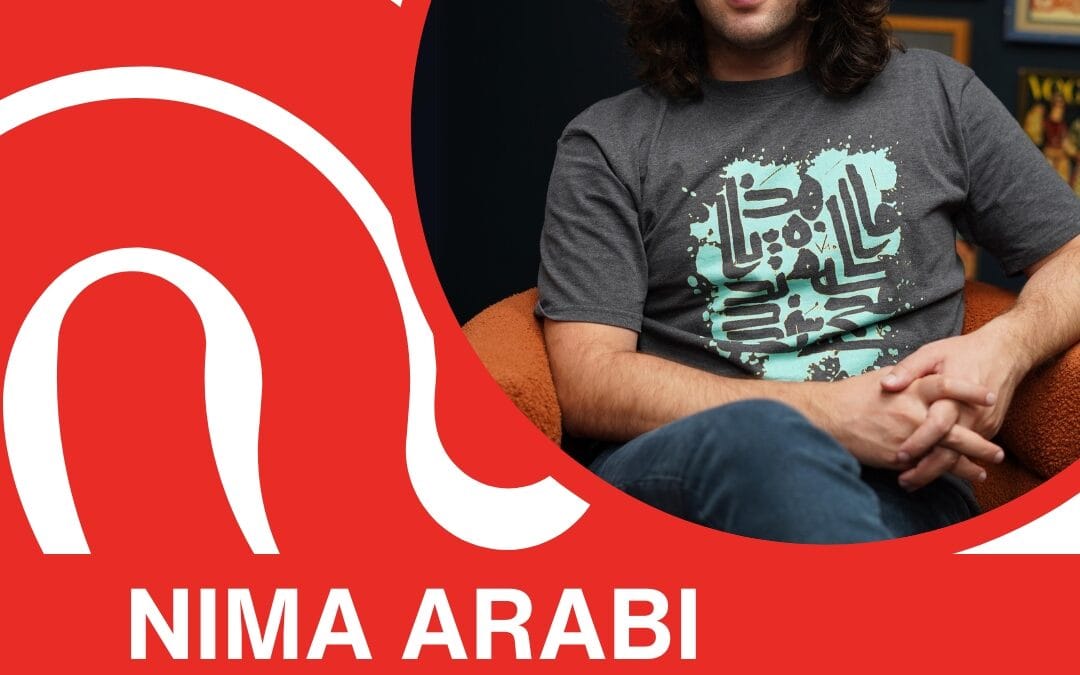
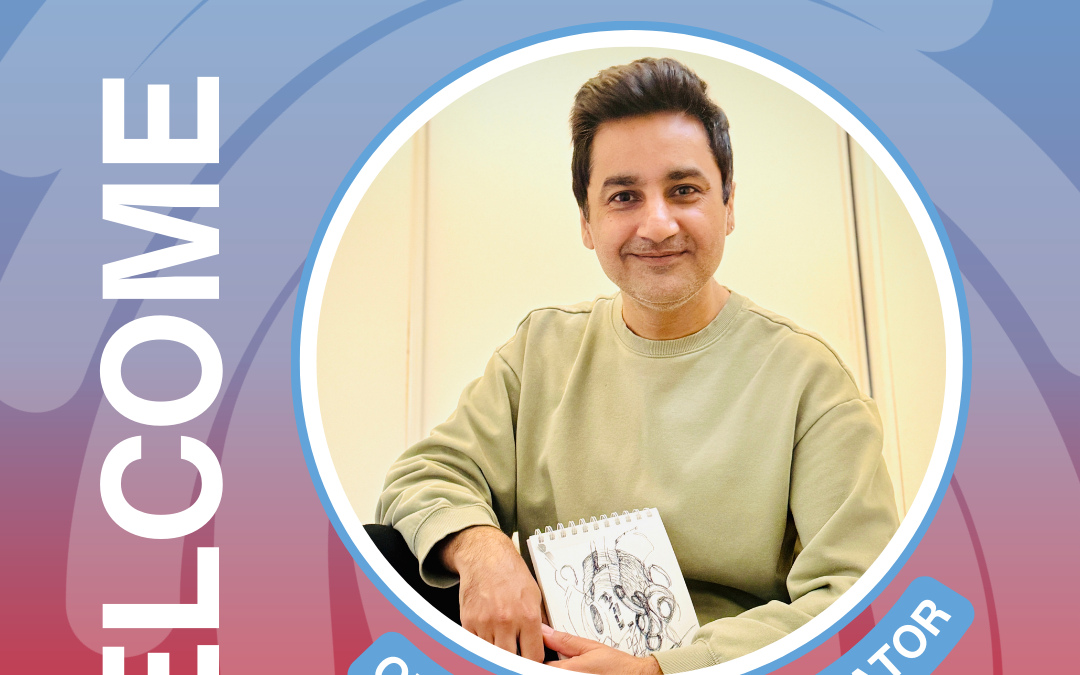
We asked Nima a few questions to give you a glimpse into the creative mind behind his practice. Get to know the inspiration and vision that fuels his artistry!
Question 1: What is one of the most valuable lessons you’ve learned through your art practice?
Patience has become a core lesson for me. With a naturally hyperactive mind, I used to be focused on quickly completing each piece, eager to move on to the next. My art practice, however, taught me to value the journey as much as the destination. Now, I approach my work with multiple sittings, allowing ideas to unfold and spending time testing my materials. I’ve found that the more I invest in understanding the medium and refining the approach, the richer
the final piece becomes. This patience has extended into my life, teaching me to appreciate processes and to take things step by step. It has made me a calmer, more grounded person, both in art and in life.
Question 2: What projects will you be focusing on during your time as a guest artist with North York Arts?
I’m excited to focus on bridging the gap between my two primary media: drawing and sculpture. This project is an opportunity to explore the intersection of two-dimensional and three-dimensional forms, creating works that balance line and physical structure. During this time, I’ll be sketching, researching, and documenting my ideas, building a foundational vision for this series. My goal is to compile this creative exploration into a grant proposal to help realize the
project on a larger scale. This time with North York Arts gives me the space to experiment and develop a solid framework to bring this concept to life.
Question 3: In what ways has North York influenced your art practice?
North York Arts has given me a sense of recognition that’s invaluable. Being part of their community, I feel seen and validated as a professional artist. It’s not just about exposure; it’s about belonging to a network that supports and encourages my growth. This recognition has boosted my confidence, allowing me to refine my voice and approach, knowing that it resonates with an audience. It’s empowering to feel that my art has a home and community here.
Question 4: Describe your creative process in three words.
Paradox, Connection, Exploration.